
One Mountain, Many Paths
Thinking at Night
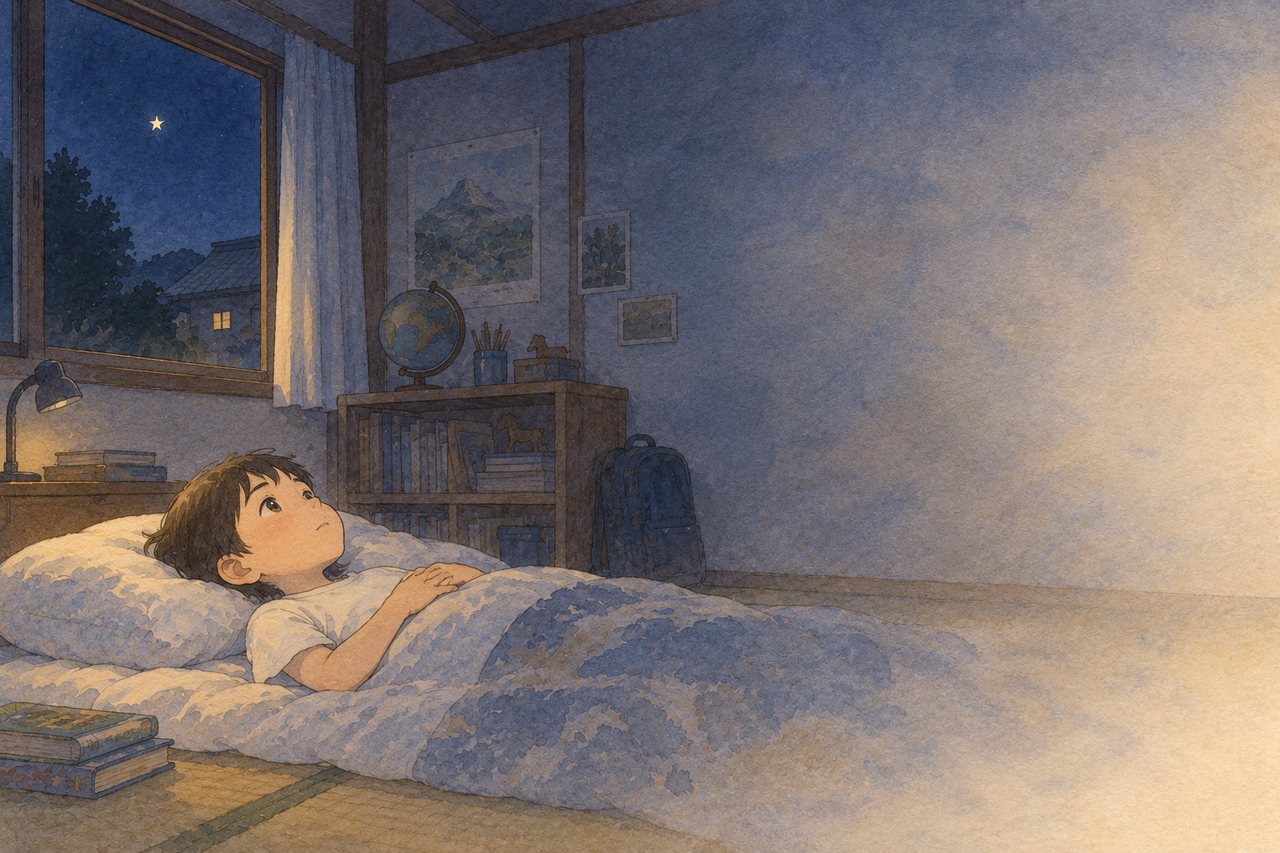
At night, when you are tucked in bed, do you ever find yourself wondering?
Why do bad things happen? Why do the things we love go away? Why does everyone have to die someday?
Twenty-five hundred years ago, someone wondered about the very same things.
What He Saw Outside the Gate
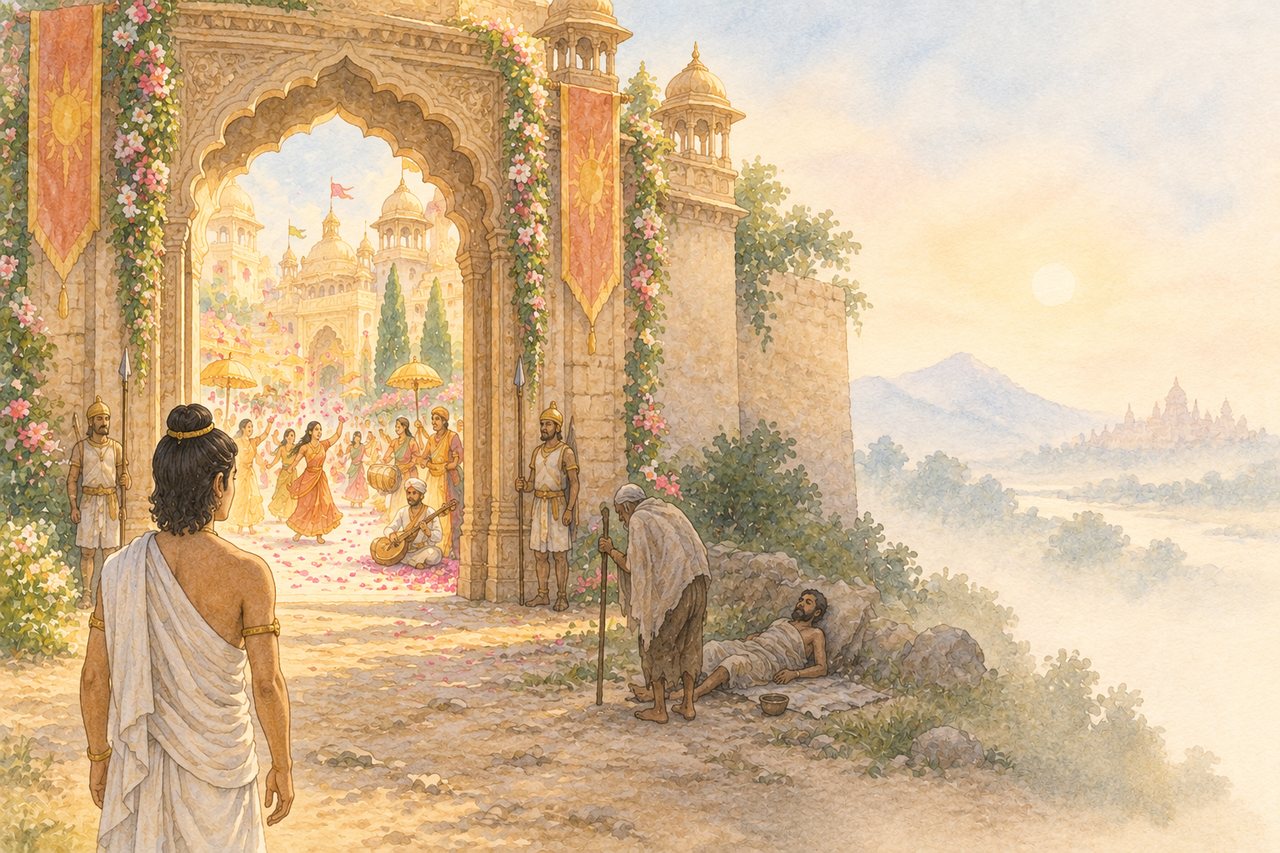
He was a prince in the land of India. His name was Siddhartha.
Inside the castle, there were only beautiful things. His father had made it so.
But the prince went out through the gate. And he saw.
An old person. A sick person. A person who had died.
"Will it happen to me, too?"
The prince left the castle.
Thin, and Then Stopping
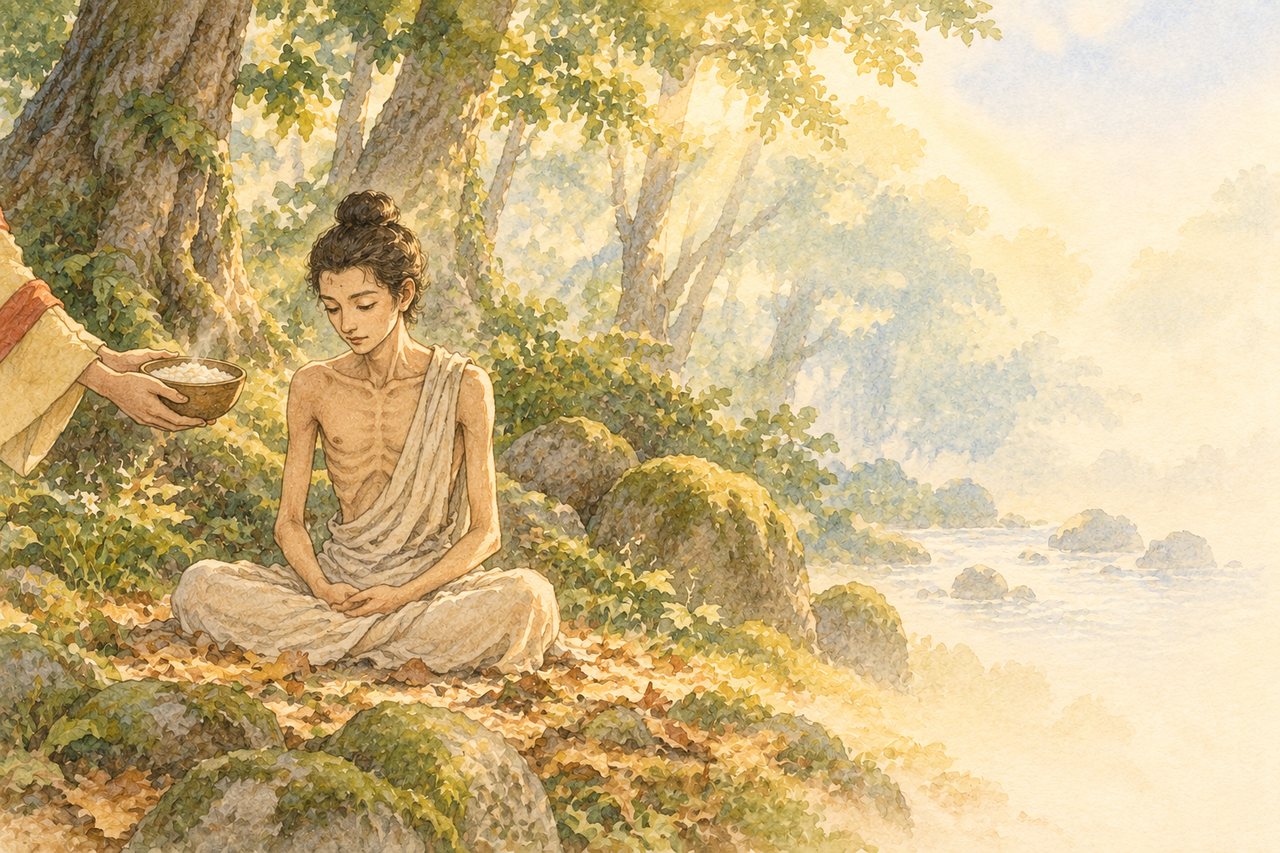
For six years, the prince trained by hurting his body.
He stopped eating. He held his breath. He became nothing but skin and bones.
But no answer came.
One day, the prince stood up and ate the bowl of rice porridge that was offered to him.
The friends who had trained beside him said, "He has given up," and went away.
Hurting yourself does not work. Pampering yourself does not work either. This is what the prince realized.
When the Stars Came Out
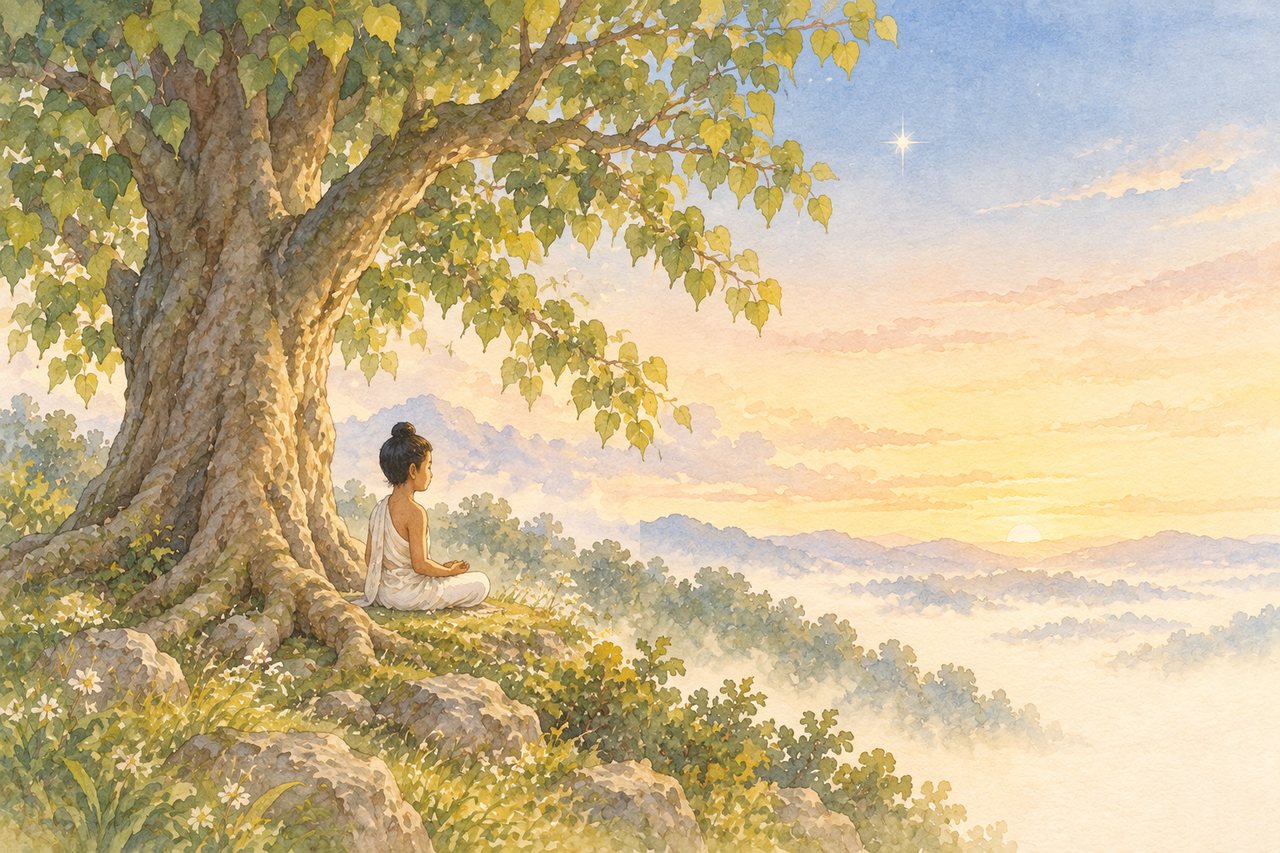
The prince sat down beneath a great tree.
"I will not get up until I understand."
He sat there all through the night.
And when the morning star rose, the prince awakened.
From that day, he was called the Buddha. It means "the Awakened One."
In Japan, people call him Oshakasama.
A River Is Never the Same River
The first thing the Awakened One saw.
Nothing stays just as it is.
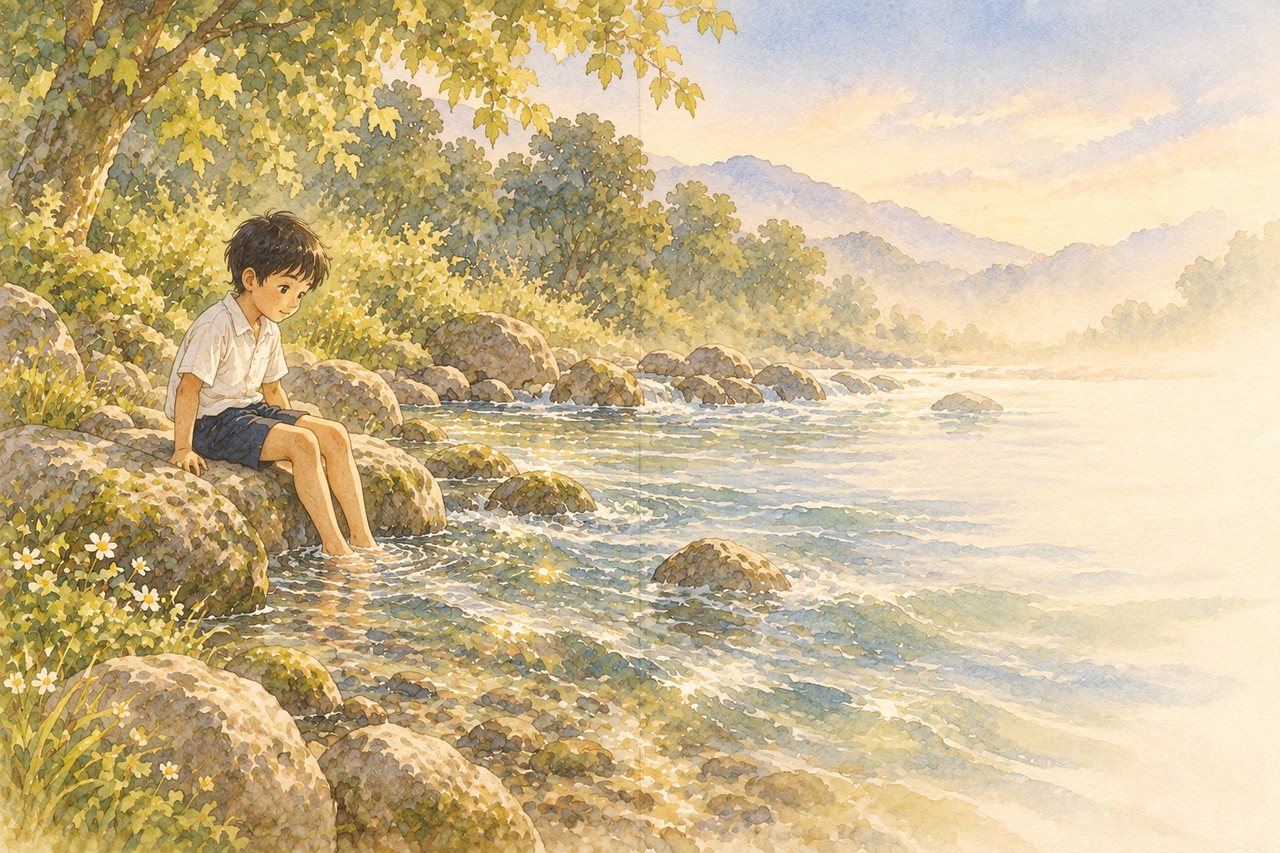
Put your foot in a river. Cold water flows past.
Put your foot in the same spot again. But the water from before has already gone far downstream.
It looks like the same river, but it is not the same river.
This is called impermanence (mujō).
And you are not the same person you were yesterday.
Nothing Is Made Alone
The second thing.
Nothing is made all by itself.
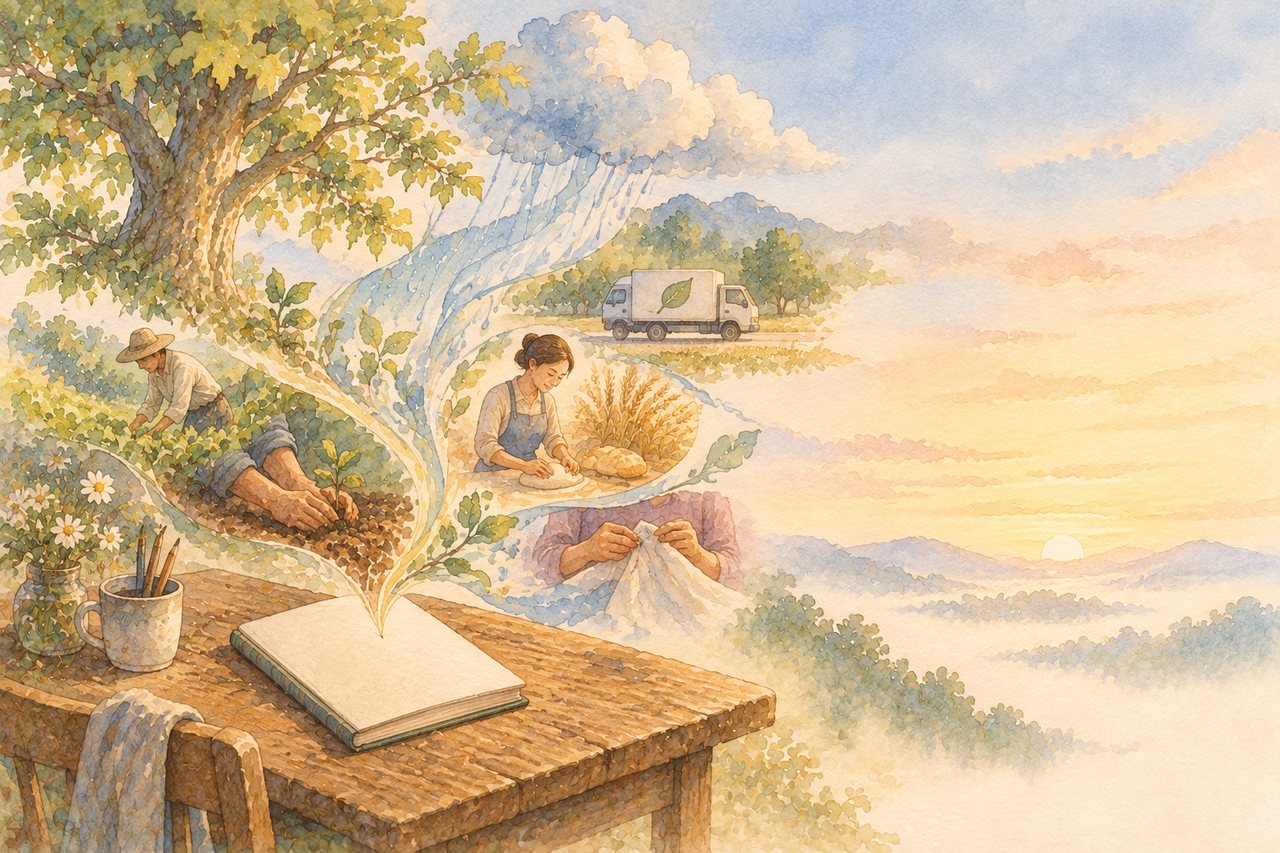
The notebook you hold is made from a tree. The tree grew from rain, soil, and light. The rain came from clouds, and the clouds from the sea. Someone carried it, someone sold it, and someone bought it for you.
The whole world is inside one notebook.
This is called dependent origination (engi).
Looking for "Me"
The third thing. This is the most mysterious one.
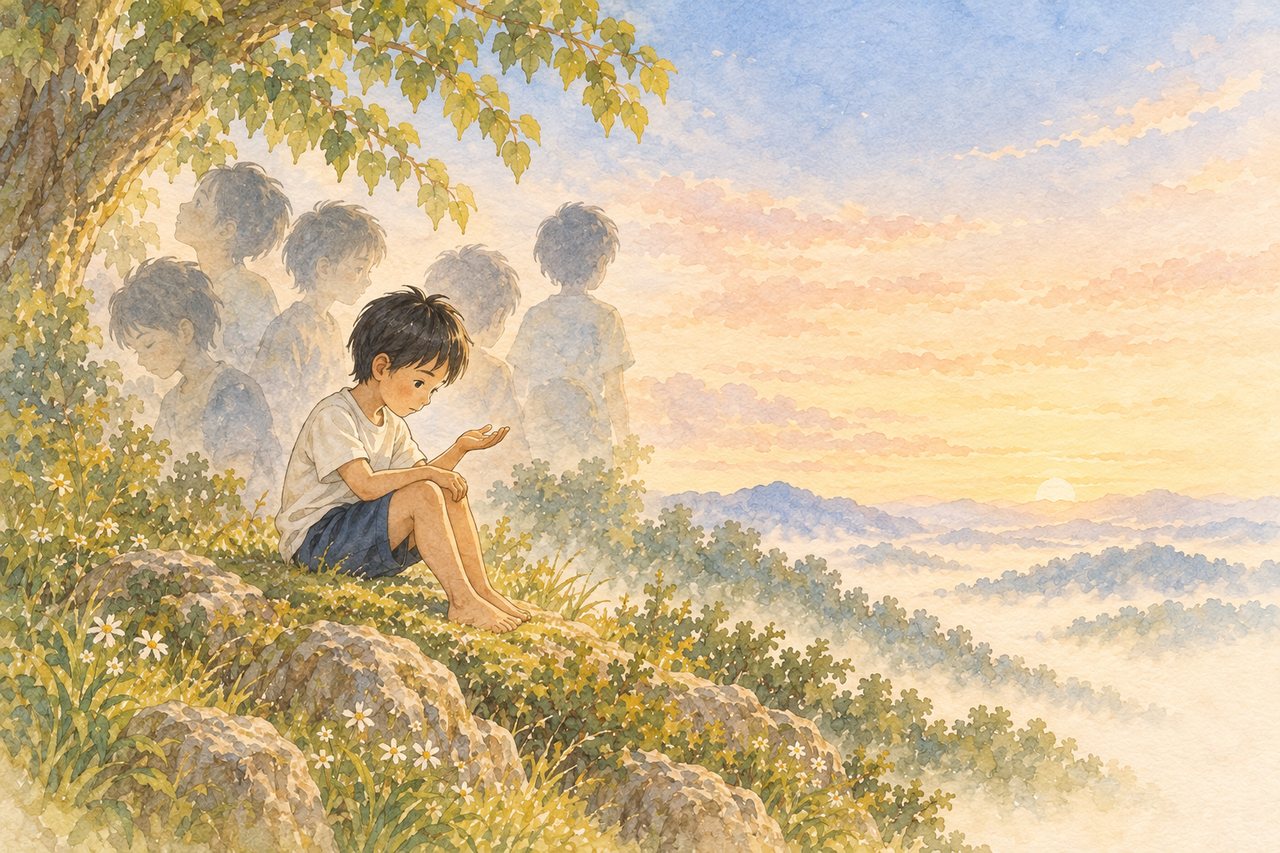
Try looking for "me."
Is your hand "me"? If it is cut off, "me" is still here. Are your thoughts "me"? They are different now from a moment ago. Is your name "me"? Even if it changes, you are still you.
Nowhere can you find a lump that says, "This is me."
But it is not that no one is here. Right now, someone is looking, and that someone is here.
It is not that there is no "me." It is that "me" is not what you thought it was.
The Mind Is a Wild Elephant
Now, can you sit perfectly still?
For ten counts, try not to think of anything. You probably cannot.
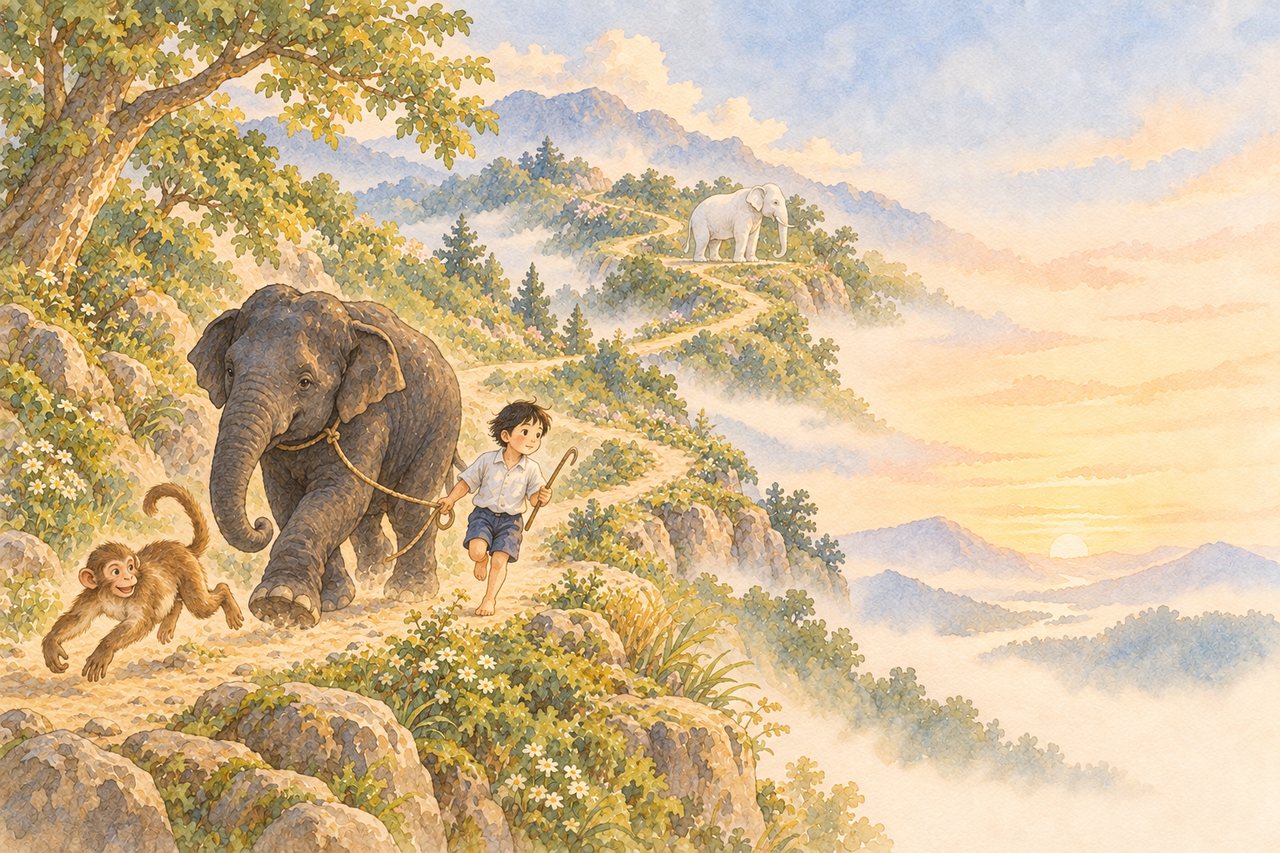
The mind is like a wild elephant. A monkey runs in front of it. The monkey is the mind that jumps at whatever catches its eye.
You chase after them from behind. You hold only two things.
A rope: the strength to remember what you are doing right now. A hook: the strength to notice, "Oh, I wandered off again."
If you keep this up, the elephant slowly grows calmer. In old Tibetan paintings, the elephant starts out jet black and is painted whiter and whiter. Turning white is a sign that the mind is settling.
And in the end, you no longer need to chase. The elephant simply stays.
Getting good at something means being able to do it without straining.
Where Is the Cup?
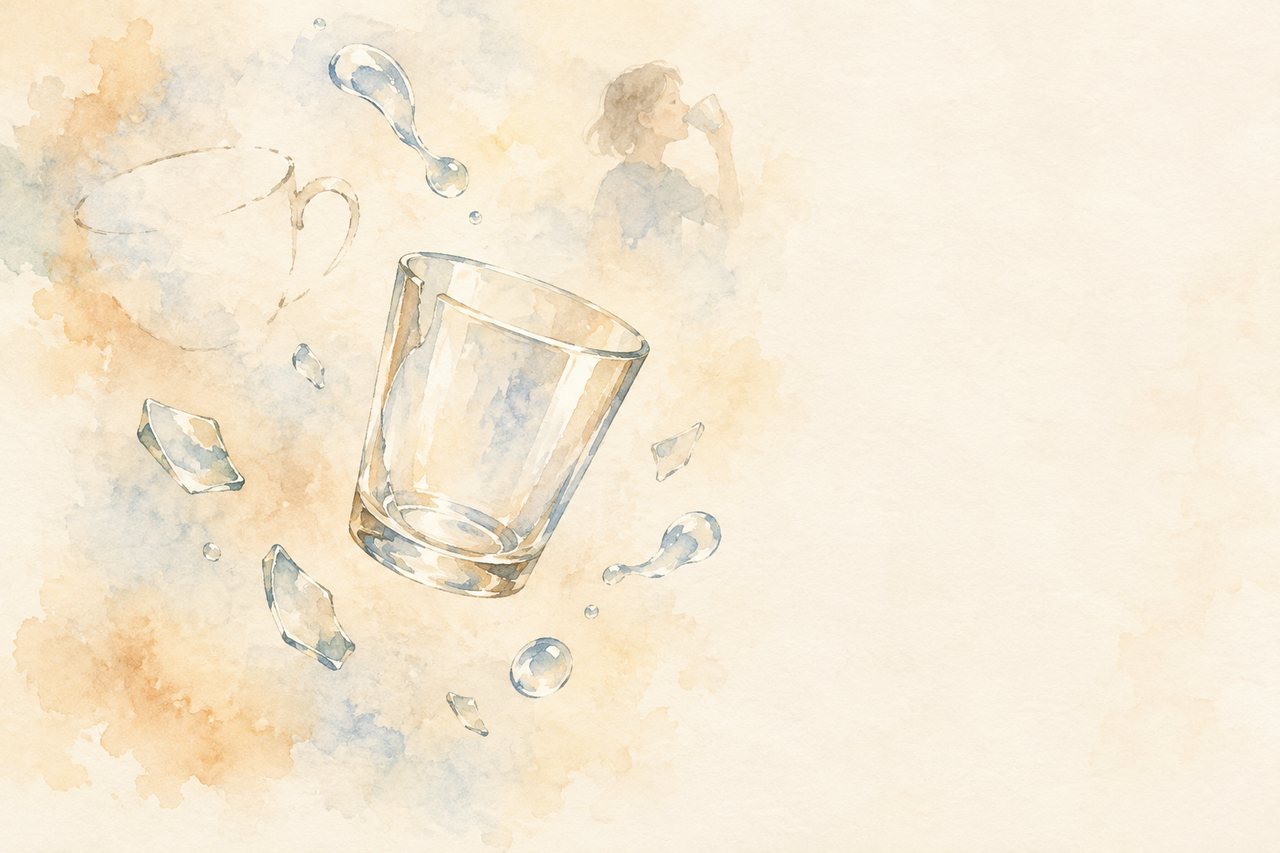
Here is a cup.
But where is "the cup itself"?
The glass is not the cup. The shape is not the cup. The job of holding water is not the cup, either.
Only when everything comes together do we call it a "cup."
It is here, but it is not something that stays the same, all by itself, forever.
This is called emptiness (kū).
It does not mean "nothing at all." It means "not a lump."
The One Who Does Not Go Ahead
After the Awakened One, people wondered.
"Is it all right to find ease only for myself?"
So some people began to make this wish.
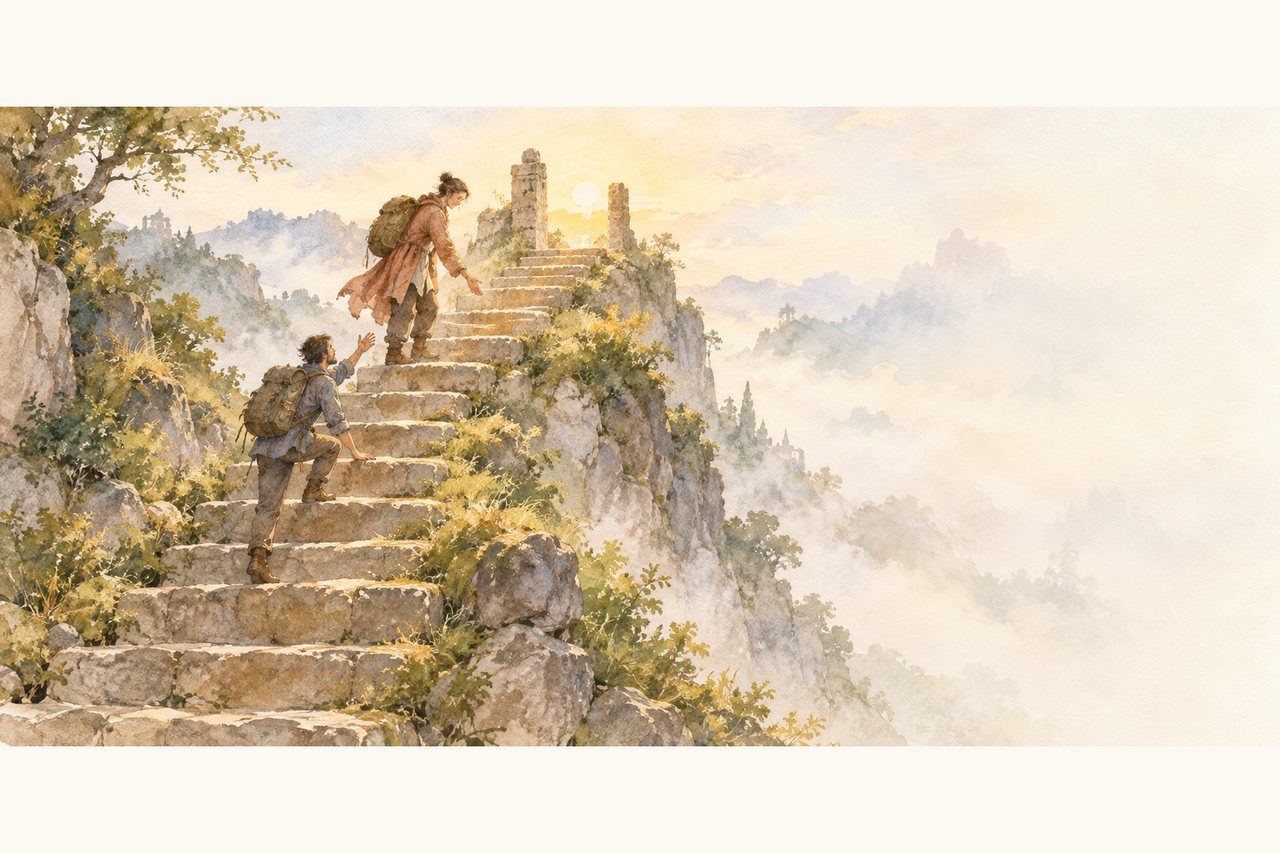
"Until everyone has crossed over, I will not go."
These people are called bodhisattvas.
They reach the very top, and then, instead of taking the last step, they turn around and look back.
You Already Have It
An old sutra tells a story.
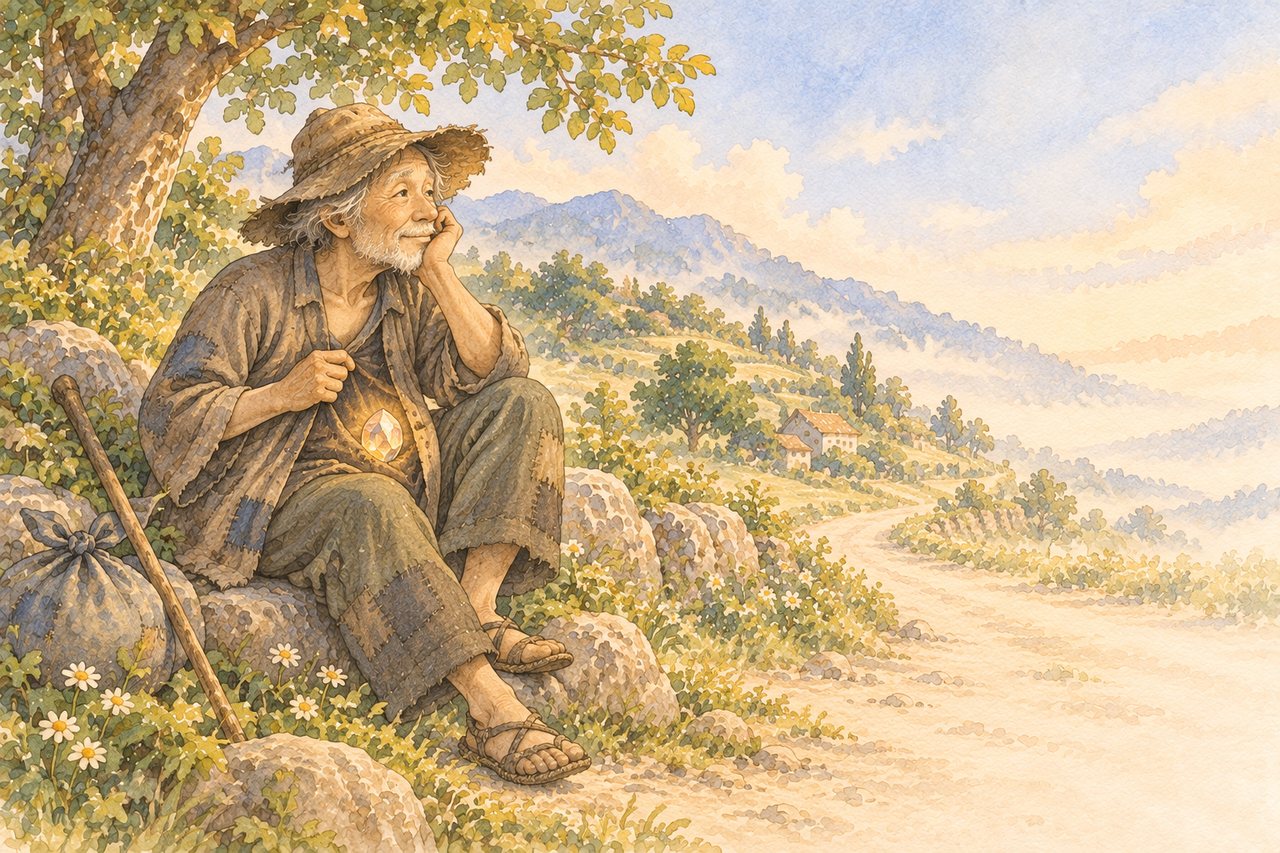
There was a poor man. A friend had sewn a jewel into the lining of his clothes.
But he did not know it, and for years he wandered about, begging.
They say we are all the same.
We already have it. We just do not know that we have it.
A Mirror Cannot See Its Own Face
So what is it that we have?
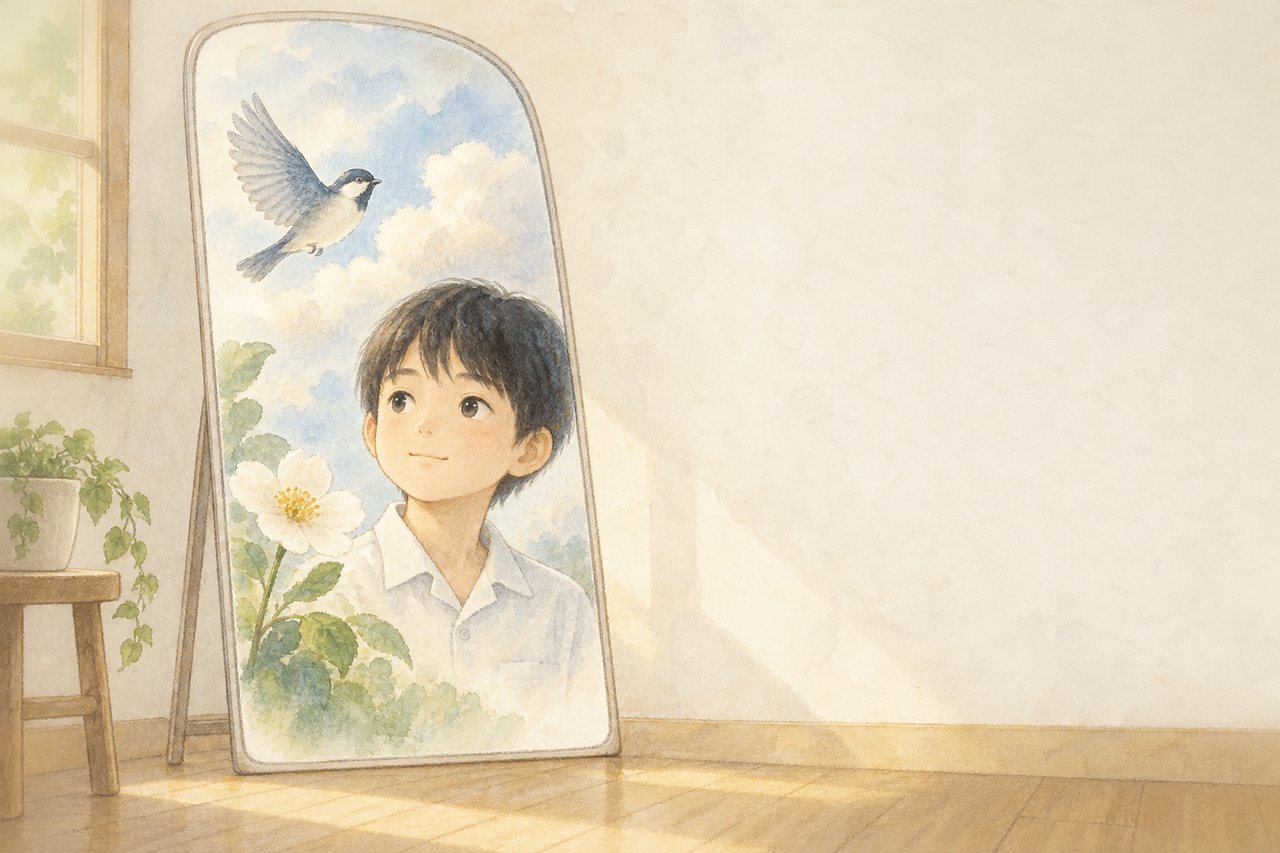
Picture a mirror.
A mirror shows everything. A flower, a bird, your face.
But the one thing a mirror cannot show is its own face.
Your mind is the same.
It sees. It hears. It thinks. It has never once stopped.
But you have never seen the mind that is seeing. It always looks at things outside, and never turns toward the one who looks.
Searching, and Never Finding
That is why you cannot find it by searching.
The one who is searching is that very mind. It is like a hand trying to grasp itself.
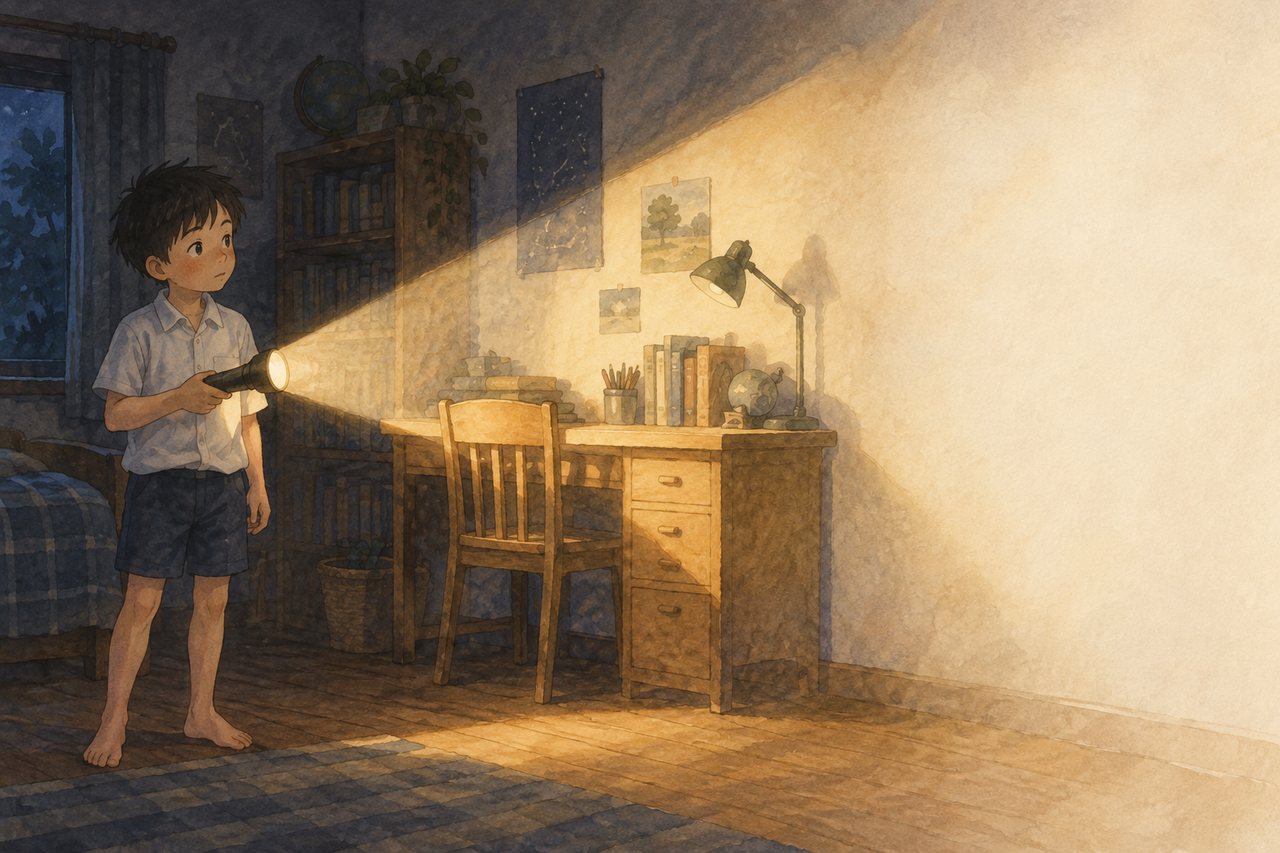
In a dark room, you switch on a flashlight. You can see the desk, the chair, the wall.
But no matter what you do, you cannot light up the flashlight itself.
You are not gaining some new power. You are not becoming someone grand.
You are only noticing what was there all along.
The path is long, not because you must travel far. It takes this long only because it takes this long to notice that it was here all the time.
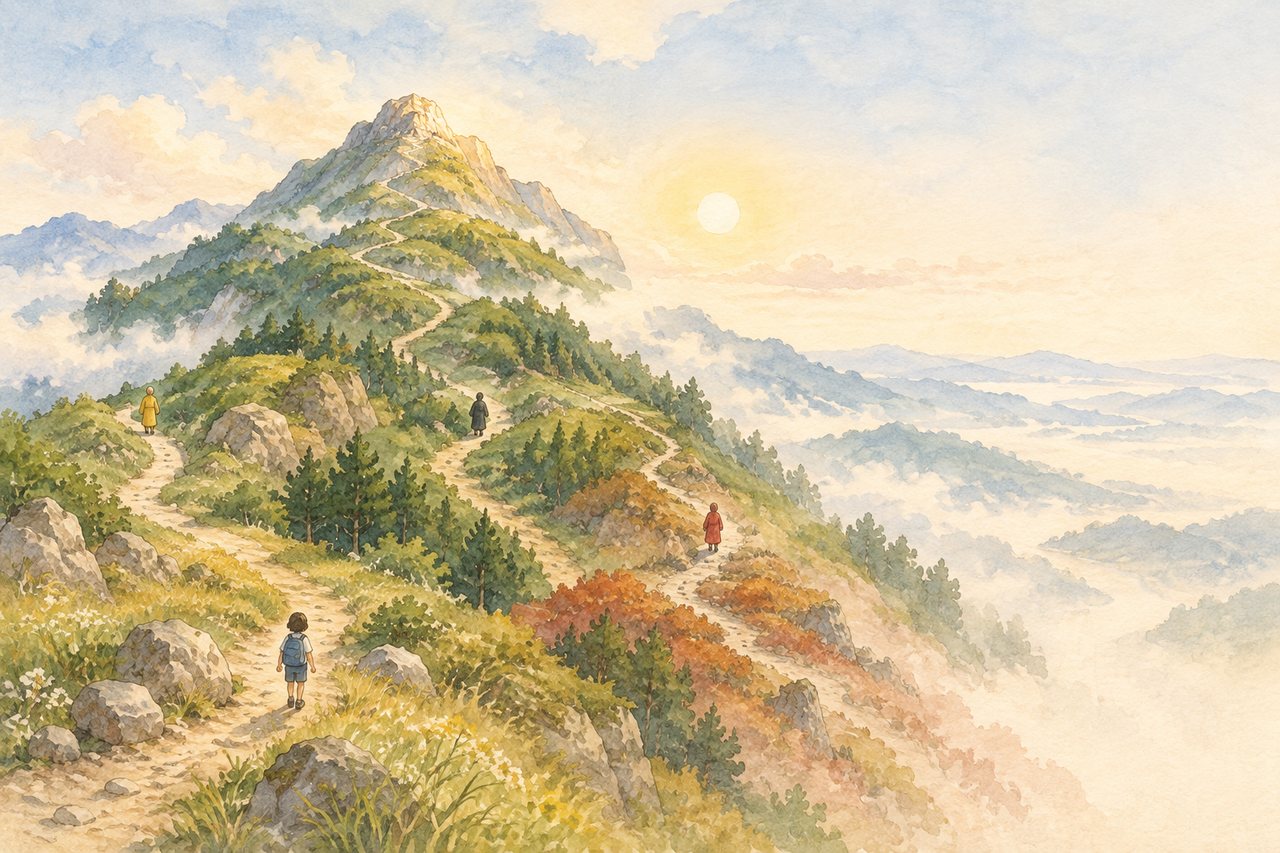
One Mountain, Many Paths
What the Awakened One realized spread from India to many lands.
In one land, people walk barefoot in the morning to receive alms. In another, people sit quietly facing a wall. In a temple on a snowy mountain, someone blows a conch shell. In a city, people close their eyes on the way home from work.
Their clothes are different, their words are different, their ways are different. Sometimes they do not even know about one another.
But...
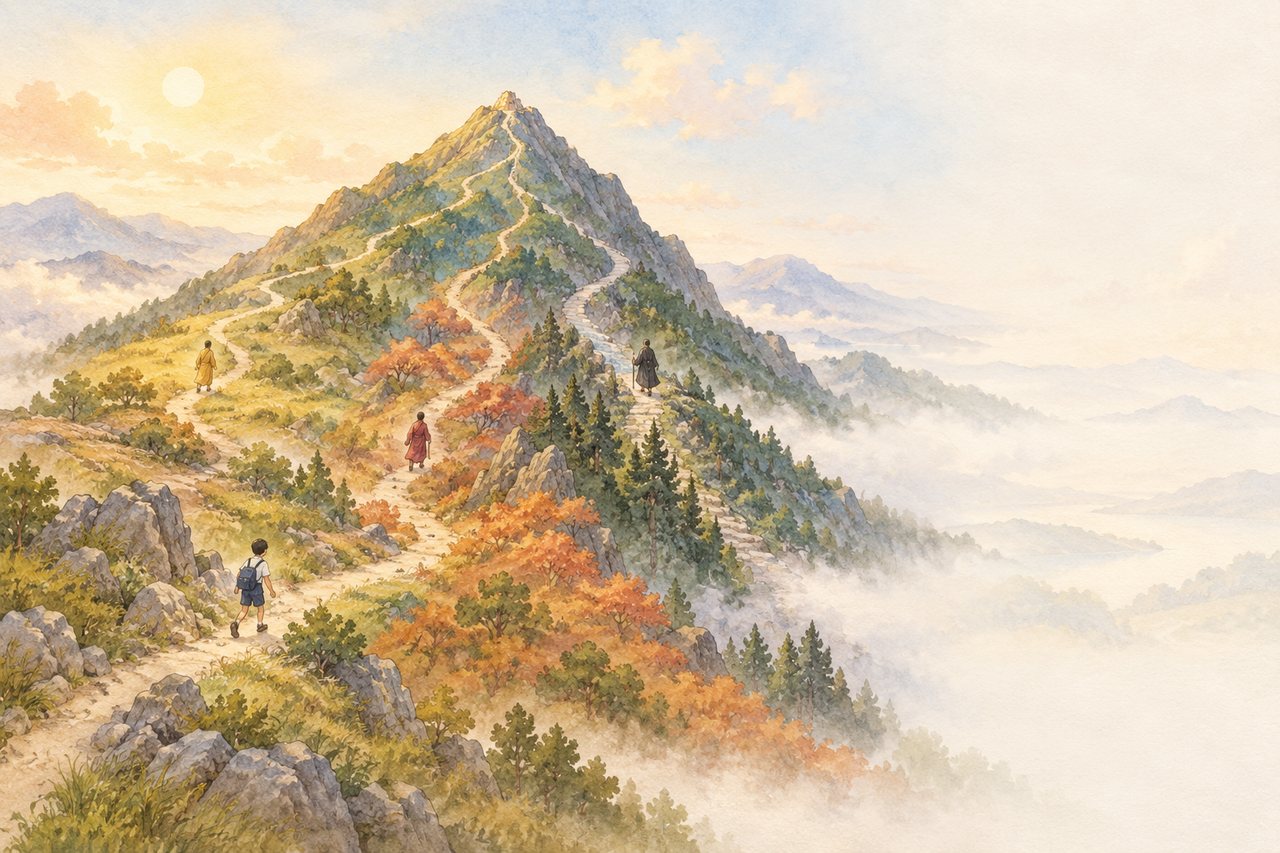
The mountain is one.
There are simply many paths up.
So no path is better than another. Just climb the path that is near you.
And on every path, there are those who climbed before you.
Do not climb alone.
Whether you are only spacing out or truly noticing, you cannot tell by yourself.
In Closing
What is written in this book is what people all over the world have checked for twenty-five hundred years.
People with different skin colors, different languages, and different names for God, each in their own place, came to notice the same thing.
You already have it. You just have not noticed yet.
Someday, quite suddenly, you will notice.
It does not matter which path you climb.
The mountain is one.
For that day, we leave this book here.
This picture book is free for anyone to read.
By Kiyotsugu Kawasaki / Three Kaya Dharma Center