
This is a group that reads, together with its participants, excellent Buddhist books not yet available in Japanese, working through them in the original language.
There is a reading circle for each book, and each is held online (Zoom). Participants are asked to purchase the original book themselves.
In the reading circle, everyone keeps the original book at hand, and the Director translates and explains it on the spot.
For books whose translation we have been given permission to prepare, we make translated texts available for participants to read. At present these are three books: The Life of the Living Buddha Konka, The Fourteenth Dalai Lama's Explanation of Tantra, and Buddhist Meditation. For all other books, we do not provide translated texts.
Books We Are Reading
The Taste of the Blessing of Luminous Clear Light Is Now a Published Book
The Taste of the Blessing of Luminous Clear Light
By Chung Tulku Rinpoche; translated by Kiyotsugu Kawasaki
This is a book by Chung Tulku Rinpoche, the teacher of our center. It is the book our center holds most dear, and we also use it in the Introductory Buddhism Seminar.
Because it has now been completed as a published book, we will not hold a reading circle for it for the time being. Please read it in book form. We are working hard to prepare an information page on Amazon.
2. Sky Dharma
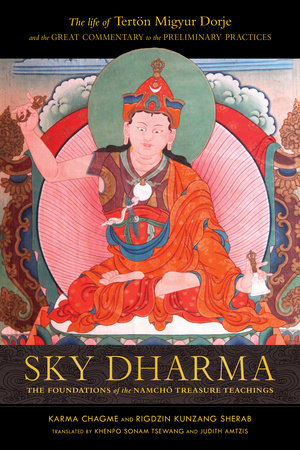
Sky Dharma: The Foundations of the Namchö Treasure Teachings
By Karma Chagme and Rigdzin Kunzang Sherab; translated by Judith Amtzis and Khenpo Sonam Tsewang
Snow Lion (Shambhala Publications), 2022, 528 pages, ISBN 978-1-55939-504-5
This volume brings together two foundational texts of the Palyul lineage of the Nyingma school.
The first half is Karma Chagme's biography of the tertön Mingyur Dorje (1645–1667). It tells how this child prodigy, recognized at the age of seven, received the Namchö ("Sky Dharma") teachings through pure visions of Avalokiteshvara and Padmasambhava during a three-year retreat beginning at the age of thirteen.
The second half is a commentary on the Namchö Ngondro (preliminary practices) by his chief disciple, Rigdzin Kunzang Sherab, the first throne holder of Palyul. It teaches the uncommon Ngondro of refuge, generating bodhicitta, mandala offering, Vajrasattva, and guru yoga, laying a firm foundation before one enters the main practice.
3. An Ocean of Blessings
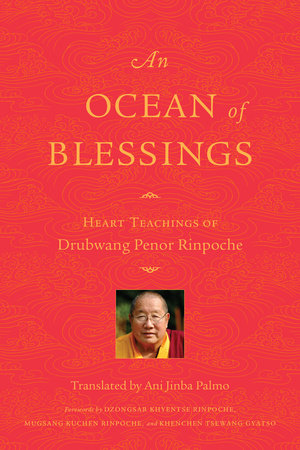
An Ocean of Blessings: Heart Teachings of Drubwang Penor Rinpoche
By Penor Rinpoche (1932–2009); edited and translated by Ani Jinba Palmo; foreword by Dzongsar Khyentse Rinpoche
Snow Lion (Shambhala Publications), 2017, 184 pages, ISBN 978-1-55939-469-7
This is the first substantial collection of teachings in English translation by His Holiness Penor Rinpoche, a great realized master of the Nyingma school in the twentieth century, who rebuilt Namdroling Monastery in South India.
It contains oral instructions for practitioners of the Vajrayana that are basic yet go straight to the heart. Loving-kindness, mindfulness, and simplicity: these three, which are essential for becoming a true yogi, are what His Holiness teaches again and again.
4. Treasury of Precious Qualities

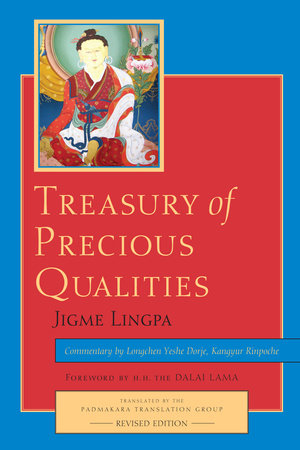
Treasury of Precious Qualities
Book One: Sutra Teachings (revised edition, 2010, 576 pages, ISBN 978-1-59030-711-3)
Book Two: Vajrayana and the Great Perfection (2013, 544 pages, ISBN 978-1-61180-099-9)
By Jigme Lingpa (1730–1798); commentary by Kangyur Rinpoche; translated by the Padmakara Translation Group; foreword by His Holiness the Fourteenth Dalai Lama; Shambhala Publications
This is a concise guide that sets out the whole Buddhist path step by step, following the Nyingma system of nine vehicles. It resonates closely with the framework of this course.
Book One covers the Sutra portion. It begins with impermanence, karma, and ethical discipline, then proceeds to the Four Noble Truths and twelve links of dependent origination of the Shravaka Vehicle, and to the bodhicitta and six perfections of the Mahayana.
Book Two covers the Tantra portion. After discussing transmission, empowerment, and the generation and completion stages, it presents Dzogchen, which the Nyingma school regards as the summit of all the vehicles, within the framework of "ground, path, and fruition."
Because the root verses are highly poetic, Kangyur Rinpoche's commentary is indispensable.
5. A Guide to The Words of My Perfect Teacher
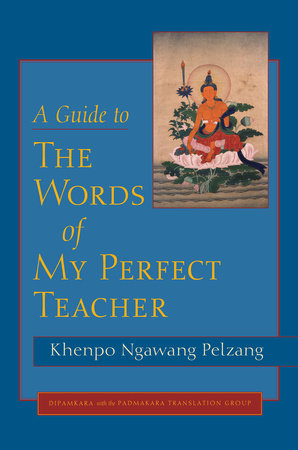
A Guide to The Words of My Perfect Teacher
By Khenpo Ngawang Pelzang (Khenpo Ngakchung, 1879–1941); translated by the Padmakara Translation Group
Shambhala Publications, 2004, 336 pages, ISBN 978-1-59030-073-2
This is a chapter-by-chapter commentary, by the Nyingma scholar Khenpo Ngakchung, on Patrul Rinpoche's masterpiece Kunzang Lame Shelung (The Words of My Perfect Teacher).
It provides the background needed to read the Ngondro (preliminary practices) of the Longchen Nyingtik lineage from the standpoint of both practice and scholarship, and it offers fresh perspectives on the role of the teacher, the stages of the path, the Three Jewels, and Madhyamaka thought. It is addressed not only to followers of the Nyingma school, but to anyone working on the preliminary practices shared by all four major schools.
6. Buddhist Meditation: Meditation Methods of the Fifteen Vehicles of Buddhism

Buddhist Meditation: Systematic and Practical
Dictated by Chen Chien-min (Yogi C. M. Chen, 1906–1987); recorded by Bhikkhu Kantipalo
First edition 1967 (Kalimpong, India) / Chinese edition Buddhist Meditation (佛教禪定), Religious Culture Publishing House, 1997, 457 pages
This is a systematic treatise on meditation, dictated to an English monk and recorded by him in a hermitage in the Himalayan foothills by Chen Chien-min, a lay yogi who studied under thirty-seven teachers across the Sutra, Tantra, and Southern (Theravada) traditions.
It arranges the calming and insight practices of the Hinayana, Mahayana, and Vajrayana as one connected system. It leads step by step from the five contemplations that calm the mind, through the nine stages of settling the mind, the contemplation of emptiness, the six perfections, and the five stages of bodhicitta, to the generation and completion stages of Tantra.
It has two distinctive features. First, it repeatedly urges the reader to establish the foundation of the Hinayana (renunciation) before going further. Second, drawing on the author's own twenty-eight years of practice, it even addresses the obstacles that arise in practice and how to tell "false realizations" from genuine ones.
7. Tibetan Treasury of Teachings for the Time of Death: The Practice of Death Teachings
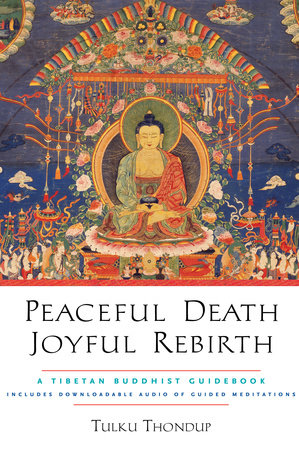
『藏密臨終寶典:藏傳佛教30則還陽實證暨投生淨土指南』
By Dungse Rinpoche (Tulku Thondup); translated by Jin Jixiang Nü; Zhongsheng Culture (Taiwan), 2015, ISBN 978-986-6091-37-7
Note: We are reading it while also consulting the English edition, Peaceful Death, Joyful Rebirth (Shambhala)
This is a practical guide to the Tibetan Buddhist teachings on the dying process, death, and the intermediate state (bardo).
It collects thirty accounts of Tibetan delok, people who died and returned to life, showing concretely what happens after death. On that basis, it organizes the teachings on preparing for death, the experiences of the bardo, and rebirth in a pure land, covering both doctrine and practice.
It is written as a guide that can be used for oneself and also by those who care for others at the end of life.
8. Biographies of Eminent Masters: A Kagyu Tulku, Konka Living Buddha (The Life of the Living Buddha Konka)
『貢噶活佛』 By Wang Desheng, Yunnan Nationalities Publishing House, ISBN 978-7-5367-3378-7
This is the biography of Konka Living Buddha (1893–1957), an eminent Kagyu master who brought Tibetan Buddhism to the Han Chinese world in the twentieth century. The Living Buddha, who received the Yangti Nakpo transmission, manifested a rainbow body when he entered nirvana. The book even includes an account of how his sacred body was preserved.
It follows his life: his birth and recognition as a Living Buddha, his enthronement, his studies in Derge and within Tibet proper, his retreats, his austerities in the snow mountains, his teaching in Han Chinese regions, and finally the founding of schools in Tibetan areas.
The reading circle for this book has ended. The Japanese translation is complete and is due to be published soon. Once it is published, we will set up a gateway here for purchasing it on Amazon.
9. Biographies of Eminent Masters: A Nyingma Tulku, Nuona Living Buddha (The Life of the Living Buddha Nona)
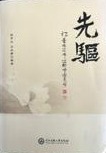
『先驅 —— 憶普佑法師諾那呼圖克圖』
Compiled by Chen Shenghan; Minzu University of China Press (Beijing), 2016, ISBN 978-7-5660-1262-3
This is a collection of biography and reminiscences commemorating the life of the Nyingma Living Buddha Nuona Hutuktu (1865–1936). The title's "Dharma Master Puyou" is an honorific name that was bestowed on Nuona Hutuktu.
Born in Chamdo, Tibet, he was recognized as a Living Buddha at the age of three. He was later held in confinement in Lhasa, and in 1923 he escaped and entered the Han Chinese regions. He gave empowerments to many people in Shanghai, Nanjing, Sichuan, and elsewhere, and was one of the earliest eminent masters to spread Tibetan Tantra in Han Chinese regions. He entered nirvana in Garze in 1936. Afterward, a relic of the heart appeared: his heart remained intact and did not decay.
10. The Fourteenth Dalai Lama's Explanation of Tantra
『達賴喇嘛介紹密咒金剛乘』
Teachings by His Holiness the Fourteenth Dalai Lama; oral interpretation by Jiangyang Renqin; proofread by Geshe Jianbei Qingzeng
Snow Land Publishing (Taipei), 2020, 246 pages, ISBN 978-986-9834-15-5 (Volume 18 of "The Collected Works of the Dalai Lama")
This volume compiles His Holiness's teachings on the preliminary practices and his talks from seventeen teaching sessions held between 2005 and 2019.
It is organized from two perspectives, "an introduction to the view of the Mantra Vajrayana" and "guidance for practice," and it explains how to practice the Vajrayana through the Kriya Tantra practice of Avalokiteshvara.
11. Vajrayana Case Files
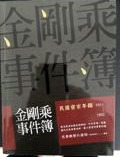
『金剛乘事件簿:民國密宗年鑑(1911-1992)』
Compiled by Pamaichenzhe Rinpoche (Dr. Huang Yingjie); Business Weekly Publications, 2019, ISBN 978-986-477-670-2
This is a chronicle, arranged by year, of how Tibetan Tantra made its way into the Han Chinese world from 1911 to 1992.
It records, in time order, the activities and events connecting Mongolian-Tibetan Buddhism with the Han Chinese regions, allowing readers to follow the historic moments of the "eastward journey of the secret teachings." It is a collection of primary sources that is rare even in the Chinese-speaking world.
Books We Plan to Read Next
The Practice of Bodhicitta (translation complete)
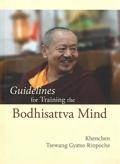
The Practice of Bodhicitta
By Khenchen Tsewang Gyatso Rinpoche
This is a book on the practice of bodhicitta, handed down in the Palyul lineage of the Nyingma school. The author himself entrusted us with its Japanese translation, and the translation is already complete. We have not yet decided when to begin. We will let you know as soon as it is decided.
The Practice of Dzogchen (coming soon)
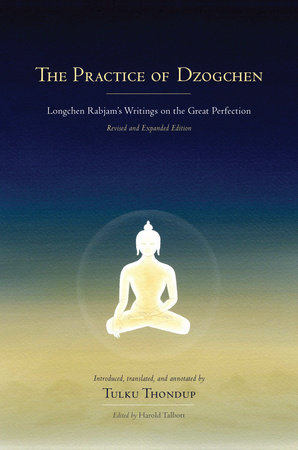
The Practice of Dzogchen
By Longchen Rabjam; translated and with commentary by Tulku Thondup Rinpoche
Tulku Thondup Rinpoche selected Dzogchen writings by the fourteenth-century master Longchen Rabjam and added translation and commentary. We plan to take it up in the reading circle. We will announce the dates as soon as they are decided.
How to Take Part
The reading circle is run on a membership basis.
To take part, you need to complete member registration. Because applications are made with your name and contact information, we cannot accept anonymous applications.
- Please complete your member registration
- After registering, go to "Applications and Consultations" on the members' page, choose the book you would like to read, and apply
- After our center confirms your application, we will invite you to the LINE group
- In the LINE group and on the members' page, we will share the Zoom link and the Google Doc for each book
- Feel free to join the circle for any book that interests you
- Please purchase the original book of the circle you join yourself (this is a condition of participation). Our center will tell you how to buy it. In the reading circle, everyone follows along with the original open at hand
We recommend that you start by observing a session. Before you buy the original book, please see for yourself what the circle is like.
Observation is also open to those who have completed member registration. Please register first.
You do not need to have decided which book you want to read. Please register first and then talk with us. Dates and fees will be announced with the information for each session.